

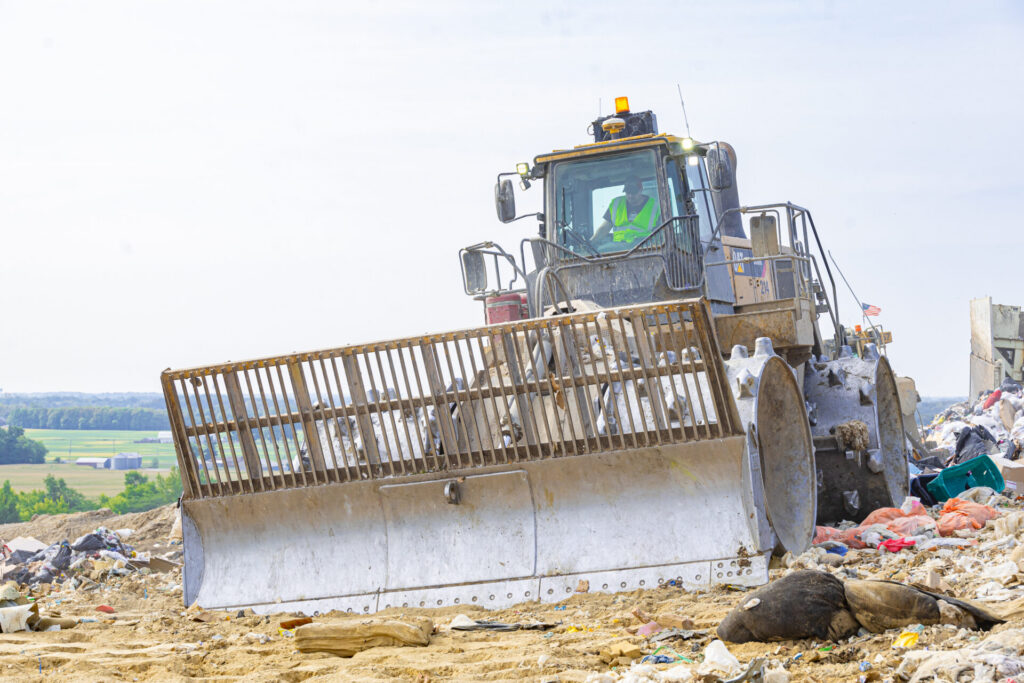
“Dumpster fire” has become a familiar way to describe a situation that’s gotten out of control. At the Franklin County Sanitary Landfill, a fire is something SWACO works hard to prevent and safely control.
With thousands of tons of waste arriving each day, there are a lot of variables to manage. SWACO works to control as many of those variables as possible, from keeping hazardous materials out of the waste stream to monitoring the working face for signs of heat. When a potential fire does occur, trained staff and specialized equipment are ready to respond quickly.
But preventing a landfill fire often starts before the waste ever reaches the landfill.
Household Hazardous Waste: A Major Fire Risk
Many landfill fires can be traced back to materials that shouldn’t be in the trash to begin with. Batteries, propane cylinders, flammable liquids and other household hazardous wastes can become dangerous when they are crushed or damaged by heavy equipment. Batteries are one of the most common concerns. This includes everything from lead-acid car batteries to lithium-ion batteries found in power tools, e-bikes, scooters, laptops and other electronics. When batteries are crushed or punctured, they can spark, overheat or, in the case of lithium-ion batteries, experience thermal runaway.
Propane cylinders and other pressurized containers can also cause problems. A grill tank, camping cylinder or aerosol can that ends up in the trash can be damaged during compaction and release flammable contents.
Flammable liquids, such as gasoline, lighter fluid and certain solvents, can create additional risk when they end up mixed with other combustible waste.
The good news is that these materials don’t have to end up in the landfill. Franklin County residents can use SWACO’s free household hazardous waste disposal program to safely get rid of many of these items before they enter the waste stream.
How Does a Landfill Fire Start?
The working face is where it all comes together. This is the active area of the landfill where trucks unload their waste and heavy equipment spreads and compacts it.
Compaction is an important part of landfill operations. It helps SWACO make the most of the space available and safely manage incoming waste. But it also means materials hidden inside a load can be crushed or punctured by heavy equipment.
A battery, propane cylinder or other hazardous item can be damaged during this process. In some cases, that damage can create enough heat or a spark to start a fire.
At first, a fire may be small and difficult to see. That’s why catching a hot spot early can make a big difference.
How SWACO Spots Fires Early—and Stops Them in Their Tracks
SWACO uses several layers of fire prevention and response at the landfill. Technology helps staff identify potential problems, while equipment and trained operators allow them to respond quickly.
Fire Rover monitoring: The landfill uses thermal imaging technology to monitor for unusual heat that could indicate a developing fire. When a potential hot spot is identified, staff can investigate and respond before the situation escalates.
Equipment fire suppression systems: Landfill equipment is equipped with fire suppression systems designed to help protect operators and equipment if a machine fire occurs.
Incoming load screening: Prevention starts at the gate. Staff look for prohibited materials in incoming loads and work to keep items such as propane cylinders and batteries from reaching the working face.
Trained operators: The people working at the landfill are another important part of the response. Operators are trained to watch for signs of a potential fire, including smoke, unusual odors or areas of unusual heat.
Together, these measures give SWACO multiple ways to identify and respond to a fire before a small problem becomes a larger one.
________________
A landfill fire can do more than interrupt operations. It can create smoke, affect air quality, put employees at risk and require significant resources to contain.
That’s why fire prevention is part of everyday landfill operations.
And residents play a role, too.
When a car battery, lithium-ion battery or propane cylinder goes into the household trash, it can become a fire risk once that material reaches the landfill. Taking those items to the proper disposal location helps keep them out of the waste stream and makes the landfill safer for the people who work there.
So the next time you hear the phrase “dumpster fire,” remember that the real thing is something SWACO takes seriously. At the Franklin County Sanitary Landfill, preventing fires starts with keeping hazardous materials out of the trash and continues with trained staff, specialized equipment and technology ready to catch problems early.
Learn more about proper household hazardous waste disposal at SWACO.org.