As the Food Business Incubation Services Director at the Food Fort, Jacob Freisthler was well aware that there was a lot of organic material going to waste from the facility, and highly motivated to eventually capture some of it. Jacob applied and was awarded a SWACO Community Waste Reduction Grant, leading to a new partnership with central Ohio’s solid waste authority. The new pilot program, running through 2024, aimed to measure the amount of food scraps being generated on site at the Food Fort and, eventually, to capture it for compost.
The Food Fort is a food business incubator in which vendors can rent commercial kitchen space, and an arm of the Economic and Community Development Institute (ECDI), a Columbus nonprofit that helps small entrepreneurs with capital, training, and other support services that a fledgling business may need to get its feet under it.
Jacob’s team expected that Food Fort vendors would generate about 140 lbs. of food scraps over the course of one week. They were surprised to learn that their 70 vendors were generating an average of 575 lbs. each week (or about 30,000lbs per year).
——————————————————–
“I’ve been blown away with how seamless the implementation has been,” said Freisthler. “The program has been fantastic for our whole company. Some vendors and office staff have even started separating food scraps at home for composting now, which was not an intended part of the program.”
——————————————————–
How Does the program work?
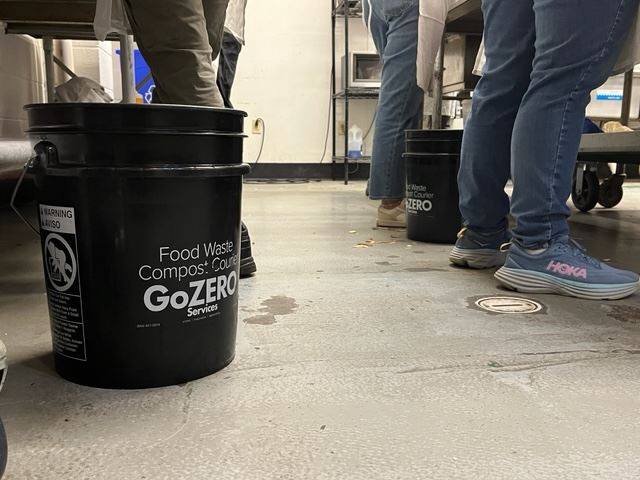
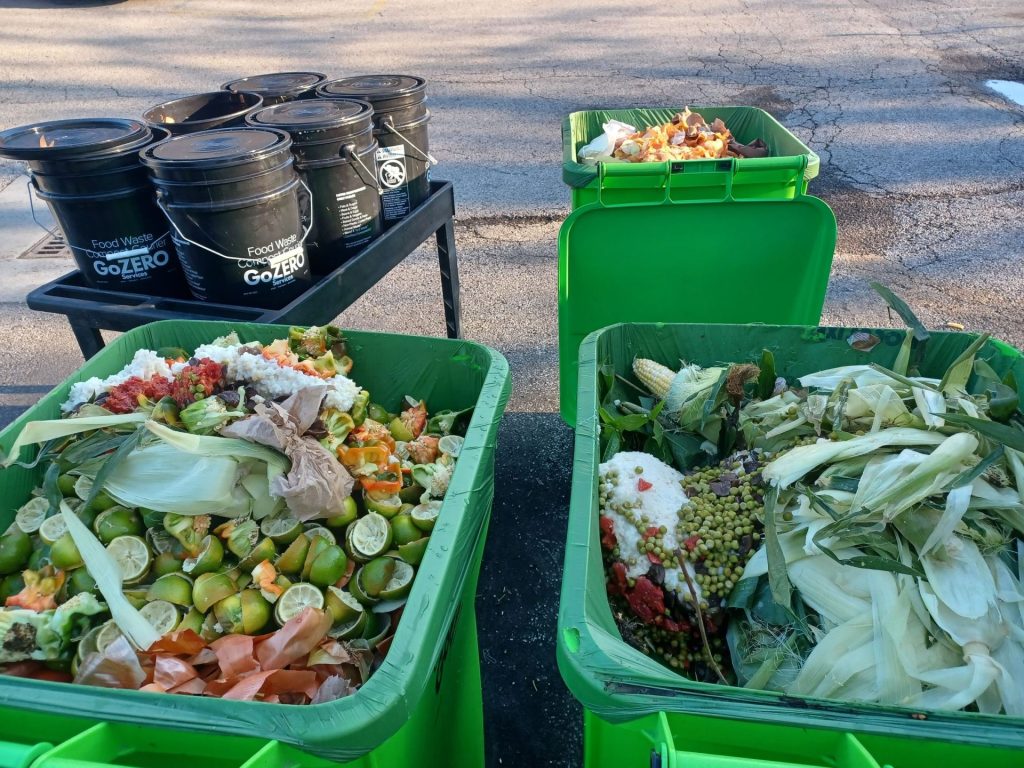
Vendors pick up a bucket at the beginning of their shift, fill it up with food scraps throughout the day in their individual kitchen spaces, and bring it to a designated location at the end of the day. ECDI staff dump the contents of the buckets into large bins and then rinse and sanitize the buckets, readying them for vendors to use the next day. A hauling company picks up the bins once a week and brings them to a composting facility.
Have there been any hiccups or challenges?
Jacob says that implementation was pretty painless. Vendors were largely interested or at least willing to try to participate. When contamination (anything that isn’t a food or paper product that won’t break down in the composting process) was noted by the ECDI staff, an informal conversation reminding vendors and their employees about how the program worked was enough to eliminate instances of repeated contamination. Once Jacob explained how the food scraps were going to be turned into soil, not just arbitrarily placed into a separate bin, the errant plastic gloves soon disappeared from the food waste buckets.
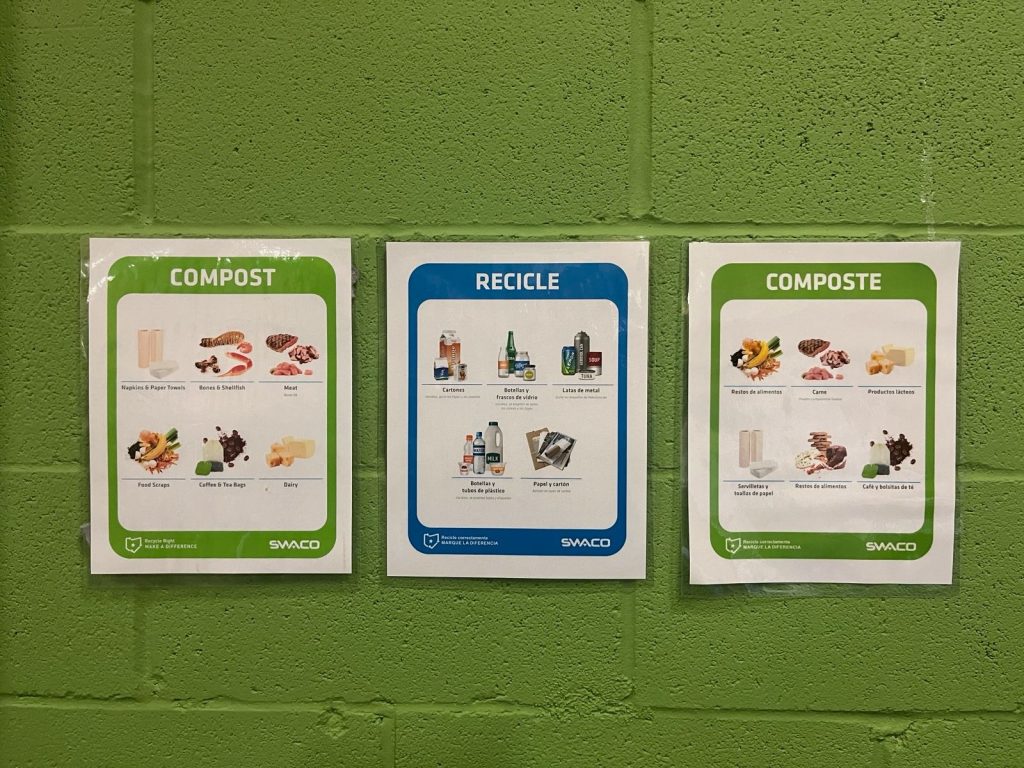
Signage also helped. Jacob worked with SWACO staff and used SWACO’s Sign Maker Tool to create signage in multiple languages to use throughout the kitchen facility, providing vendors multiple visual reminders about how the program works.
Will the program continue?
While using a hauler to divert organics towards composting is working smoothly, Jacob has ambition to manage the material on site. He plans to continue the program in its current format for another year while his team considers what processing the material themselves could look like, and then. From his perspective, by showing how easy organics diversion can be, ECDI is setting the framework for more sustainable business practices in the future for the many vendors who utilize the Food Fort.
Do you own a business or work in one that might consider diverting food scraps? Get in touch with our food waste team by emailing [email protected] or visit SaveMoreThanFood.org to find resources for businesses on food waste prevention, donation, and composting.