

What’s the longest you’ve ever planned for something in advance? One week? One month? One year? How about the next 40 years?
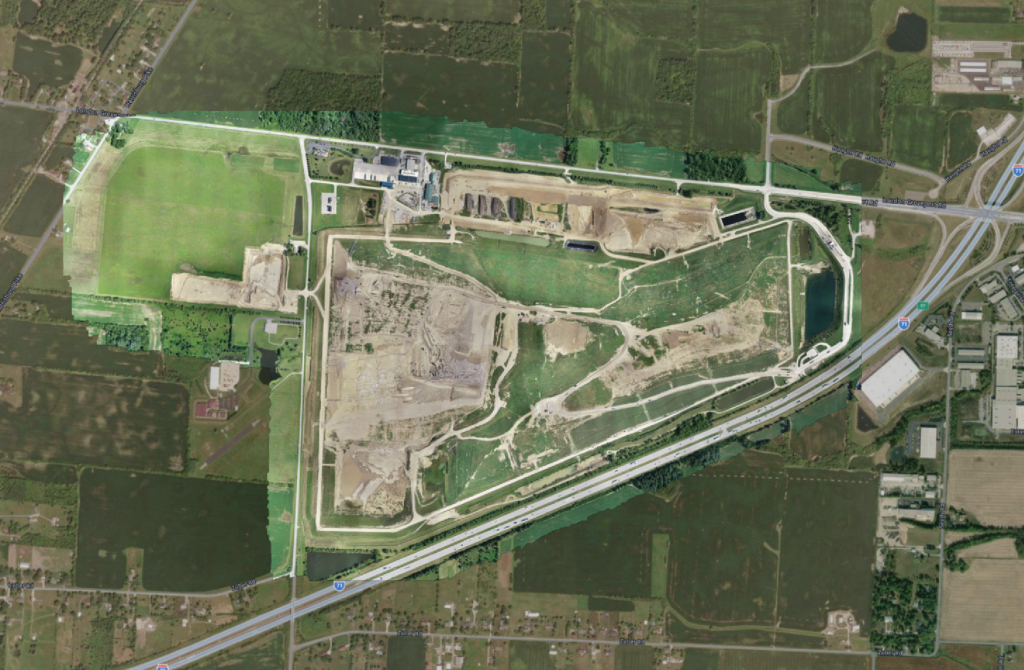
That’s the kind of long-term planning that goes into the Franklin County Sanitary Landfill, where details are carefully mapped out — sometimes decades ahead. Since the landfill site opened in 1985, SWACO has implemented a forward-looking strategy to see the bigger picture, ensuring safe operations, efficiency and sustainability while accommodating and supporting the needs of central Ohio.
Each year, SWACO’s engineering and compliance department updates a five-year financial budget while refining a long-term roadmap that outlines how the landfill will evolve until it reaches full capacity.
Before any updates to the plan are finalized, they must go through multiple levels of review and approval. One important step in this process is obtaining a permit to install from the Ohio Environmental Protection Agency (OEPA). The permit ensures that solid waste within the designated airspace is managed in a way that protects human health and the environment. But that’s just the beginning.
The engineering and compliance department work closely with expert consultants to design landfill cells and calculate airspace projections. Airspace refers to the volume of space available above sea level for placing solid waste. This kind of planning not only determines how much waste can go into a specific section of the landfill, but also helps to build access roads and install necessary environmental controls.
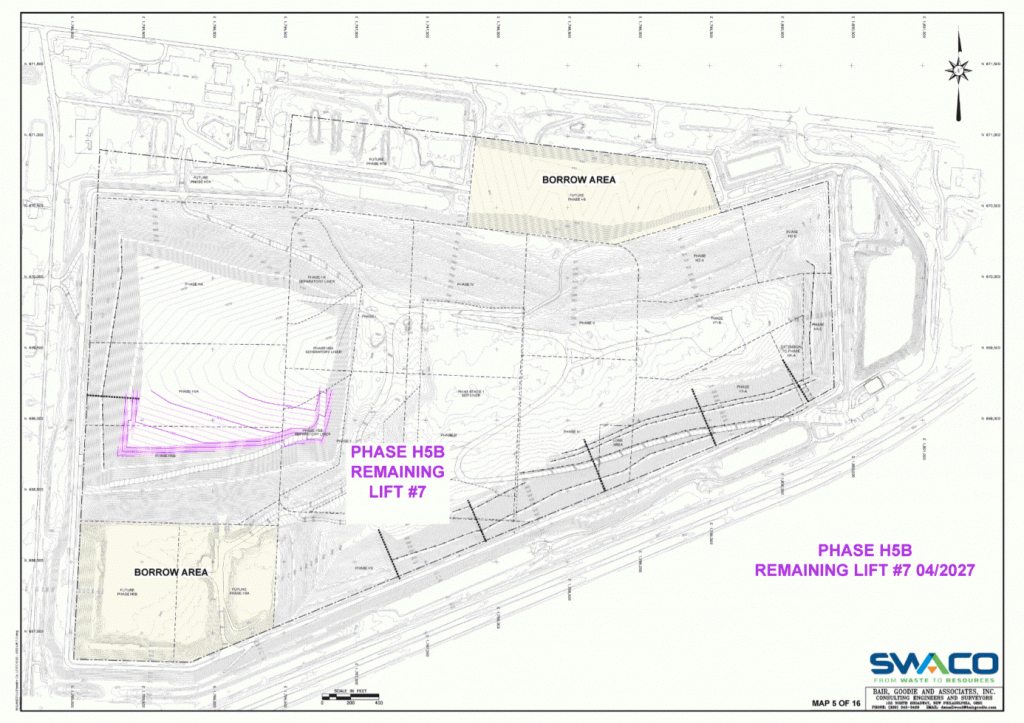
Once the design is finalized, the operations department programs it into the GPS systems installed in on-site heavy equipment such as compactors and bulldozers. These GPS-guided systems help employees know exactly where to place waste and when to compact it. This ensures that every square foot of the landfill is optimized.
Today, the landfill has an estimated life expectancy of 40.2 years, and SWACO has already mapped out what those four decades could look like, including what happens after the landfill reaches capacity. As more Franklin County residents and businesses reduce, reuse, recycle and compost, the amount of material entering the landfill could be expected to decrease. That’s a good thing because less waste means SWACO can reassess projections and potentially extend the landfill’s lifespan even further.
The landfill is an important community resource, that is expected to hold approximately 97 million cubic yards of waste at full capacity. It serves not only residents and businesses across central Ohio but also supports dozens of municipalities that rely on its operations to manage waste safely and responsibly. That’s why careful planning is essential, not just for today’s users but for future generations who will also depend on the Franklin County Sanitary Landfill.
SWACO’s team works to ensure the landfill remains a safe, well-managed and sustainable asset. With community-wide efforts toward waste diversion, continued planning and ongoing innovation, SWACO is managing a resource that can meet tomorrow’s needs — starting today.